Food news antipasto
June 8, 2026 by DarcieI received a bit of useful kitchen advice in an email from The Bittman Project that I thought was worth sharing. It was a teaser from the latest installment in the “Question Mark” series that Mark Bittman does, and the question for this was “Is it okay to put a pan into water to soak right after cooking? The answer, according to Jake Kalick, President and Co-Founder of Made In Cookware, is a resounding no. “This is on the Mount Rushmore of cookware not-to-dos, as it’s one of the best ways to warp your pan,” says Jake. He recommends waiting a few minutes for the pan to cool down: “Heat causes metal to expand. By letting it cool down at a natural rate it should settle back into its original position. If you dump it into cold water you essentially shock the pan and it can set in the expanded position. That’s what leads to warping. Investing in well-made pans made with good materials may produce less expansion, but there will still be some.”
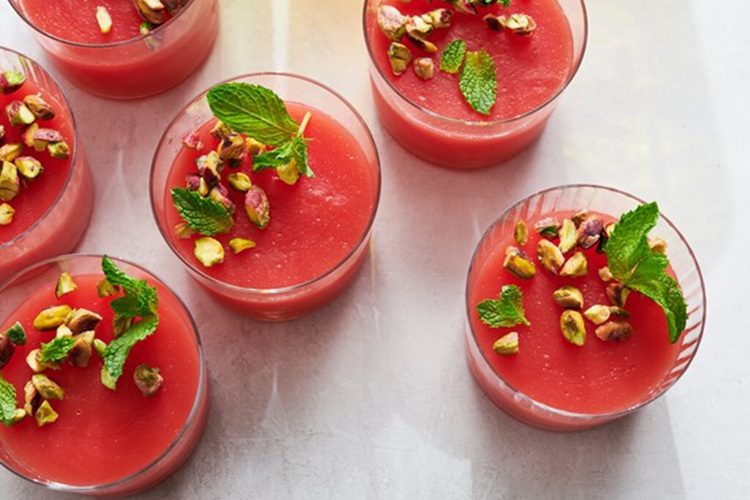
Summer is getting underway for most of our Members, and that means that watermelon season is on the doorstep. Buying a watermelon can be anxiety-producing because there it’s disappointing to cut into a glossy green melon and find that it is pale, mealy, and flavorless when you wanted juicy, sweet, and vibrant. Elizabeth Narin provides a guide on what to look for when choosing a watermelon, busting a few myths before breaking out the one characteristic to look for: the color of the ground spot. This is a (nearly) fool-proof way to find a perfectly ripe melon.
We learned this week that Tom Colicchio, long time host of BravoTV’s Top Chef, is closing his NYC restaurant Craft after 25 years. In an Instagram post, Colicchio wrote “Craft was a radical experiment that worked. It married daring austerity with communal warmth, betting on the idea that diners would enjoy having a shared, connected experience and the best food of their lives at the same time.” Colicchio said that rising costs for almost everything – utilities, rent, food, insurance, and labor – necessitated the closure.
A few days ago Hannah Twiggs expounded on how the British “picky-bit tea” has prompted supermarkets to enter an arms race to deliver the goods. What was once a casual and inexpensive nosh has morphed into an event featuring “cured meats folded into neat ribbons of continental sophistication.” Each small component may seem inexpensive but it often obscures a high price per pound. However, in the era of “little treats”, no one seems to mind.
The level of instruction provided in a recipe varies considerably depending on the author. Some hold your hand the whole way through, while others assume you possess a certain level of knowledge that shouldn’t need to be explained. If you find yourself reading one of the latter recipes, Good Food (AUS) provides five things you should always do, even if the recipe doesn’t tell you to. The first step? Always wash your hands before beginning meal prep.
Categories
- All Posts (7400)
- Antipasto (2372)
- Author Articles (260)
- Book News (959)
- Cookbook Giveaways (1009)
- Cookbook Lovers (272)
- Cooking Tips (133)
- Culinary News (308)
- Food Biz People (577)
- Food Online (831)
- Holidays & Celebrations (293)
- New Cookbooks (165)
- Recipes (1548)
- Shelf Life With Susie (231)
- What's New on EYB (142)
Archives
Latest Comments
- FuzzyChef on Food news antipasto
- Laura1 on In for Dinner, Author Article and Cookbook Giveaway
- Laura1 on Potluck Desserts Giveaway, Quick Bites and Recipes
- Laura1 on The Salad Lab Cookbook Giveaway
- Laura1 on Pull Up a Chair – Cookbook Giveaway
- Laura1 on So Easy So Good Cookbook Giveaway
- Sloober on No one saw “fricy” coming
- gamulholland on The internet is obsessed with Dotcakes
- mbbenham on Bringing back flavorful food
- averythingcooks on This kitchen tool is a cut above