Don’t tell your nonna, but this is a better way to cook pasta
May 13, 2026 by DarcieTrue or false: to make pasta you need to have a large kettle of boiling water, about 6 quarts per pound of pasta. For decades most people would have said “true”, but people are turning to a newer way of cooking pasta that uses much less water. There are several advantages to the low water method, as Serious Eats’ Leah Colins explains.
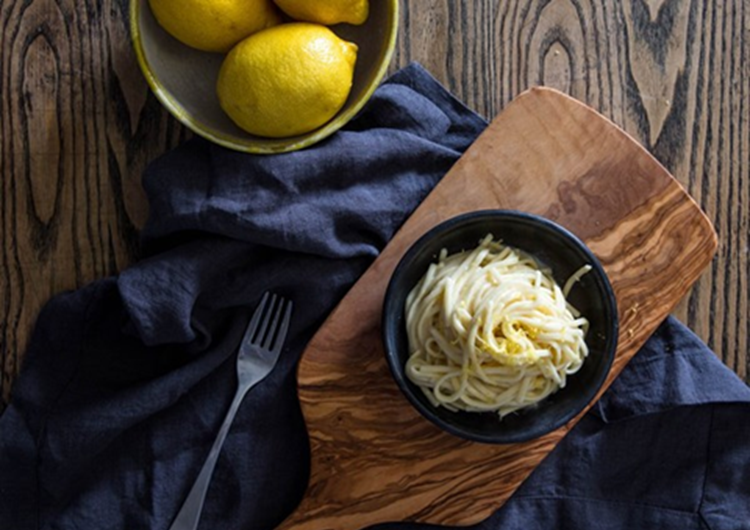
The first advantage is that it takes less time as you don’t need to wait for a cauldron of water to come to a boil. Although you might worry that the temperature drop in a smaller amount of water would be problematic, exhaustive testing shows that for home cooks the difference is negligible. Since there is less water to heat, it can return to the boil faster.
This is where I (along with America’s Test Kitchen and others) disagree with the Serious Eats article: you don’t have to wait for the water to come to a boil at all. You can start the pasta in cold water – but do stir it frequently for the first minute or two to prevent it from sticking together. As America’s Test Kitchen shows, putting the pasta in before the water heats can cut the cooking time by 45% and reduce the water needed by 75%. Both ATK and Serious Eats agree that for long pasta shapes, a skillet is better than a saucepan because you don’t have to fuss with getting the pasta to bend (or heavens forfend, break the pasta).
While the time and water savings are valuable, perhaps the greatest benefit is the higher starch concentration in the lesser amount of water. This will help sauces emulsify, especially butter and cream-based sauces. Say hello to silky smooth pasta al limone. Have you converted to the cold water, less water pasta cooking method?
Categories
- All Posts (7397)
- Antipasto (2369)
- Author Articles (260)
- Book News (959)
- Cookbook Giveaways (1009)
- Cookbook Lovers (272)
- Cooking Tips (133)
- Culinary News (308)
- Food Biz People (577)
- Food Online (831)
- Holidays & Celebrations (293)
- New Cookbooks (165)
- Recipes (1548)
- Shelf Life With Susie (231)
- What's New on EYB (142)
Archives
Latest Comments
- anya_sf on Avoid these mistakes when buying produce
- MollyB on Why the refrigerator is bad for bread
- London_Mummy on Avoid these mistakes when buying produce
- FuzzyChef on Avoid these mistakes when buying produce
- FromScratch on Tomato growing tips from an expert
- Duncanarmour on Gloagburn: Recipes from a Scottish Farm – Giveaway
- janecooksamiracle on Why the refrigerator is bad for bread
- KatieK1 on Why the refrigerator is bad for bread
- bc2rlh2023 on Chesnok by Polina Chesnakova – Cookbook Giveaway
- FJT on Bringing back flavorful food