Where credit is due
April 14, 2026 by DarcieA few days ago, when I was making a batch of oatmeal chocolate chip cookies, my husband asked me who invented the recipe. I replied that Ruth Wakefield is credited with creating the first chocolate chip cookie, but that I was using the ‘Neiman Marcus $250 cookie‘ recipe. We had a short discussion about the urban legend surrounding that recipe, which led to a longer discussion of why recipes cannot be copyrighted. This conversation raised the following question: if you can’t copyright recipes, are they fair game for anyone else to pass off as their own after they have been released to the world? This is a question that Jaya Saxena tackles in a recent article on allrecipes.com.
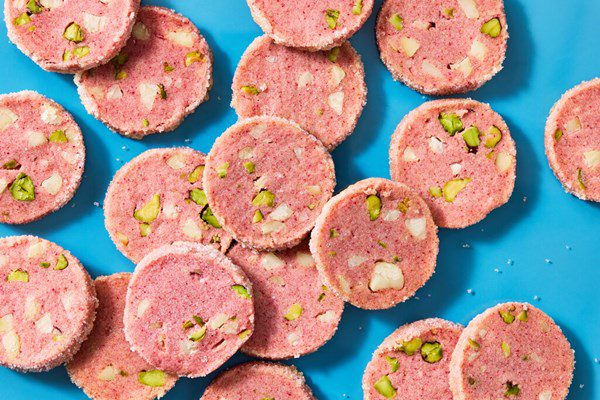
Saxena relates the story of the internet-famous ‘mortadella cookie’, which she credits to historian and recipe developer KC Hysmith, who in 2024 published a recipe for the trompe-l’oeil shortbreads studded with pistachios and white chocolate chips. However, notes Saxena, if you Google ‘mortadella cookies’ now, you will probably find this Mortadella cookies recipe (pictured above), published in 2025 by Claire Saffitz for The New York Times Cooking. The Times recipe discusses no-bake confections that resemble other charcuterie but does not mention Hysmith’s recipe. Maybe the two cookies were created independently, but Hysmith isn’t sure. She sees “a pattern of larger industry players refusing to acknowledge when others have had similar ideas, or even outright stealing well-documented recipes without credit.” The article goes on to cite examples similar to this situation.
While these challenges do not always involve small, independent creators versus huge corporate entities, that is a common scenario. There is little recourse available to the aggrieved party in these cases, even if they suffer harm from it. As Saxena notes, “the lack of citation, and in some cases more blatant ripping off on behalf of food companies, has stronger ramifications for independent creators than just hurt feelings.” Original creators risk lost sales and even reputational harm if the copycat product is inferior to theirs.
Unless the law is changed, there is no relief in sight for recipe developers whose work gets copied or riffed with no credit to them. Generative AI is making the problem even worse, says Saxena. However, AI is also bringing to light the problems with copying something without providing credit where it is due, and it’s turning people off. In a recent survey, Gen Z Americans reported increased negativity toward AI and feel that the risks outweigh the benefits of its use in the workforce. Maybe branding something as human-created will be the next big thing – with people sharing their inspiration for their creations in an effort to uplift one another. Perhaps I’m just wish-casting, but I am going to hold out hope for this.
Categories
- All Posts (7397)
- Antipasto (2369)
- Author Articles (260)
- Book News (959)
- Cookbook Giveaways (1009)
- Cookbook Lovers (272)
- Cooking Tips (133)
- Culinary News (308)
- Food Biz People (577)
- Food Online (831)
- Holidays & Celebrations (293)
- New Cookbooks (165)
- Recipes (1548)
- Shelf Life With Susie (231)
- What's New on EYB (142)
Archives
Latest Comments
- anya_sf on Avoid these mistakes when buying produce
- MollyB on Why the refrigerator is bad for bread
- London_Mummy on Avoid these mistakes when buying produce
- FuzzyChef on Avoid these mistakes when buying produce
- FromScratch on Tomato growing tips from an expert
- Duncanarmour on Gloagburn: Recipes from a Scottish Farm – Giveaway
- janecooksamiracle on Why the refrigerator is bad for bread
- KatieK1 on Why the refrigerator is bad for bread
- bc2rlh2023 on Chesnok by Polina Chesnakova – Cookbook Giveaway
- FJT on Bringing back flavorful food