How accurate are food labels?
March 27, 2026 by DarcieBefore I buy any packaged food product that I haven’t purchased before, I first look at the nutrition information and ingredient list. My husband gets exasperated when he accompanies me on shopping trips, grumbling about how much time I spend poring over the package before adding it to the cart. I ignore the grumbling because I want to know how much sugar, fat, and nutrients are in the food and what the ingredients are. That’s why a recent article on MSN caught my attention: apparently those labels may not be as accurate as I had imagined.
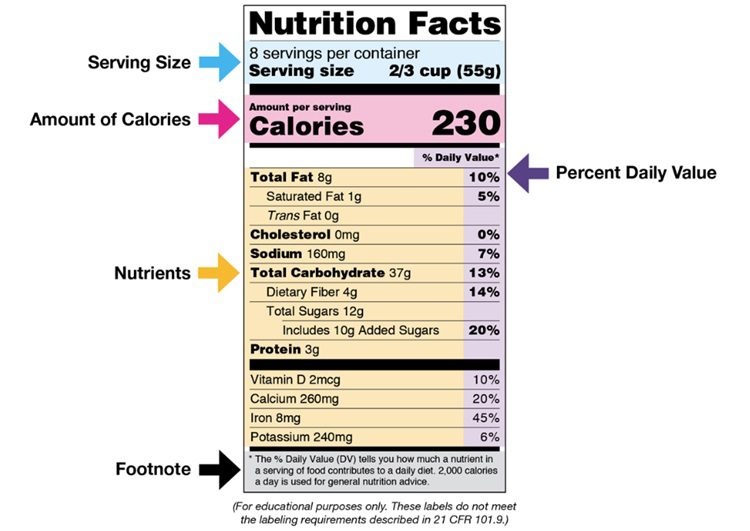
Of course, I sometimes laugh at what they consider to be a serving size – there’s no way I am going to eat a mere three Oreos in a sitting. But I thought that portion quibbles aside, if a product claimed to contain 500 calories for a listed serving size, that would be fairly accurate. Perhaps I was naive, because according to the FDA that number could be off by as much as 20% under current regulations. The rules are similar for the UK and EU. Twenty percent is a lot! According to public health advocate Marion Nestle, we should take all nutrition information listed on a label with a grain of salt. For one thing, the method used to calculate calories can result in different measurements, and for another, not all components of food are equally absorbed. According to Nestle, “fiber calories, for example, don’t count.”
Accurately calculating calories is challenging, especially when it comes to plants. Some foods have tough cell walls that might not get cracked open when eaten, therefore limiting the calories that can be absorbed. In fact, studies conducted by the U.S. Department of Agriculture found that certain foods, including nuts and legumes, have fewer calories once digested than indicated on the label. This difference can be significant, with walnuts resulting in 21% fewer calories than estimated.
This information will change the way I look at food labels. I never counted each and every calorie I ate, but I have used rough calculations based on labels to determine how much food I should consume, and how much nutrition I would receive. Maybe people like my husband, who just grabs what he wants without bothering to pore over the label, have it right after all.
Categories
- All Posts (7397)
- Antipasto (2369)
- Author Articles (260)
- Book News (959)
- Cookbook Giveaways (1009)
- Cookbook Lovers (272)
- Cooking Tips (133)
- Culinary News (308)
- Food Biz People (577)
- Food Online (831)
- Holidays & Celebrations (293)
- New Cookbooks (165)
- Recipes (1548)
- Shelf Life With Susie (231)
- What's New on EYB (142)
Archives
Latest Comments
- anya_sf on Avoid these mistakes when buying produce
- MollyB on Why the refrigerator is bad for bread
- London_Mummy on Avoid these mistakes when buying produce
- FuzzyChef on Avoid these mistakes when buying produce
- FromScratch on Tomato growing tips from an expert
- Duncanarmour on Gloagburn: Recipes from a Scottish Farm – Giveaway
- janecooksamiracle on Why the refrigerator is bad for bread
- KatieK1 on Why the refrigerator is bad for bread
- bc2rlh2023 on Chesnok by Polina Chesnakova – Cookbook Giveaway
- FJT on Bringing back flavorful food