Lucky foods for Lunar New Year
February 18, 2026 by DarcieFebruary is interesting this year as the start of Ramadan, the Lunar New Year, and Fat/Shrove Tuesday all landed on the same day. As I read on a Bluesky post yesterday, “this means that the majority of humans on the planet have a reason to eat fried food, and that is beautiful.” Focusing on the Lunar New Year, this holiday called Tet in Vietnam, Tsagaan Sar in Mongolia, Losar in Tibet, and Seollal in Korea. Unlike the Gregorian calendar, which is based on the sun, the lunar calendar uses the moon to set its dates, which means that the date is not the same from year to year and can range from January 21 to February 20. Lunar New Year is celebrated by 20% of the world’s population and like most holidays, food is a prominent feature. Each of the foods traditionally eaten during this holiday has a meaning behind it.
While there are numerous regional differences in how people celebrate the new year, common denominators include traditional foods that are deemed lucky because they sound like words for wealth, good health, and other desirable traits. Dumplings are considered lucky foods because their shape resembles an early form of Chinese currency, while fish represent an increase in prosperity because ‘fish’ sounds like ‘surplus’ in Chinese. It’s not all about wealth, however, as the round shape of sweet rice balls, eaten throughout the Spring festival in south China, is associated with reunion and family togetherness. While people in the northern part of China frequently celebrate with dumplings, in the South they are more likely to nosh on spring rolls or tangyuan.
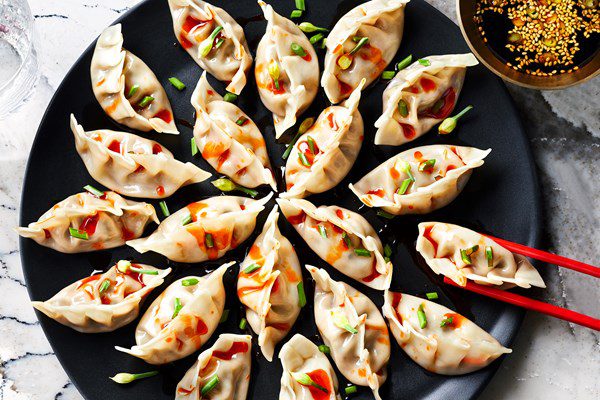
The Vietnamese ring in Tet with a variety of dishes including a red sticky rice called Xoi Gac. This is a symbolic dish because of its vibrant red coloring, which comes from gac, a baby jackfruit that is hard to come by outside of Asia. In Tibet, Losar is celebrated with momo, another variety of dumpling. These are packed with minced meat and are filled with juice, which necessitates a thicker wrapper to contain the liquid.
For Koreans, the most significant dish for this holiday is Tteokguk, rice cake soup. It is usually made with beef or anchovy broth, beef chunks, thinly sliced rice cake, with egg or al-gomyeong (a type of omelette) whisked in to finish. This dish is believed to bring longevity, good health and fortune.
Categories
- All Posts (7397)
- Antipasto (2369)
- Author Articles (260)
- Book News (959)
- Cookbook Giveaways (1009)
- Cookbook Lovers (272)
- Cooking Tips (133)
- Culinary News (308)
- Food Biz People (577)
- Food Online (831)
- Holidays & Celebrations (293)
- New Cookbooks (165)
- Recipes (1548)
- Shelf Life With Susie (231)
- What's New on EYB (142)
Archives
Latest Comments
- anya_sf on Avoid these mistakes when buying produce
- MollyB on Why the refrigerator is bad for bread
- London_Mummy on Avoid these mistakes when buying produce
- FuzzyChef on Avoid these mistakes when buying produce
- FromScratch on Tomato growing tips from an expert
- Duncanarmour on Gloagburn: Recipes from a Scottish Farm – Giveaway
- janecooksamiracle on Why the refrigerator is bad for bread
- KatieK1 on Why the refrigerator is bad for bread
- bc2rlh2023 on Chesnok by Polina Chesnakova – Cookbook Giveaway
- FJT on Bringing back flavorful food