Forget the spoon and use your fingers, says Daniel Boulud
February 11, 2026 by DarcieNYC chef Daniel Boulud has a storied history with nineteen restaurants, including Michelin stars. The chef recently spoke with Food & Wine about how to season like a French chef to get the perfect amount of salt in a dish. His biggest piece of advice is to forego measuring spoons while cooking, and instead just use your fingers to gauge the amount of salt.
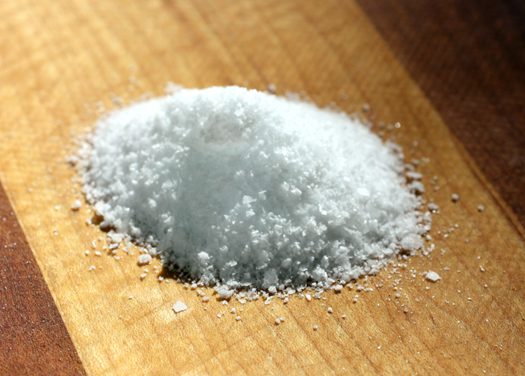
To do this consistently, Boulud says you should always use the same salt when cooking. He practices what he preaches: chefs at his restaurants all use the same fine sea salt. Boulud explains that when you use your fingers to estimate the appropriate amount of salt, you have “four options: sprinkle a delicate line of salt with two, three, or four fingers, or apply a quick dash of seasoning with two fingers, which counts as a pinch.” He emphasizes that fine salt is better for seasoning because it is easier to be consistent with it. Large, irregular flakes of salt are more difficult to work with.
If you don’t want to use your fingers (maybe Salt Bae ruined that for you), Boulud recommends using a salt mill instead of a spoon. You can count the number of grinds to know how much salt you are applying. The chef also says it is important to taste any liquid that is being salted, even if it is just plain salted water for pasta. If you taste the water before you add the pasta, you can make a correction if it is too salty. Once the pasta is cooked, it’s too late.
Boulud says that soup is one of the trickiest dishes to season, because “it’s very hard to take the salt away if you oversalt your soup, and you have to dilute your soup to take the salt away. So you always want to salt the soup with caution.” Taste the soup as you go, and at the very end, taste it again and make any necessary final adjustments.
Categories
- All Posts (7398)
- Antipasto (2370)
- Author Articles (260)
- Book News (959)
- Cookbook Giveaways (1009)
- Cookbook Lovers (272)
- Cooking Tips (133)
- Culinary News (308)
- Food Biz People (577)
- Food Online (831)
- Holidays & Celebrations (293)
- New Cookbooks (165)
- Recipes (1548)
- Shelf Life With Susie (231)
- What's New on EYB (142)
Archives
Latest Comments
- debakken on This kitchen tool is a cut above
- anya_sf on Avoid these mistakes when buying produce
- MollyB on Why the refrigerator is bad for bread
- London_Mummy on Avoid these mistakes when buying produce
- FuzzyChef on Avoid these mistakes when buying produce
- FromScratch on Tomato growing tips from an expert
- Duncanarmour on Gloagburn: Recipes from a Scottish Farm – Giveaway
- janecooksamiracle on Why the refrigerator is bad for bread
- KatieK1 on Why the refrigerator is bad for bread
- bc2rlh2023 on Chesnok by Polina Chesnakova – Cookbook Giveaway