Is cooking an art or a craft?
January 30, 2026 by DarcieWhen does something move from being a finely honed craft into a work of art? That’s the question being asked in Denmark, after its culture minister, Jakob Engel-Schmidt announced a new initiative to classify gastronomy as a fine art. If this goes forward, it would be the first time a country has made such a move. The initiative is still in the early stages, and will proceed by gathering experts together to consider the classification.
Placing gastronomy on the same level as traditional arts like painting, sculpture, or music would allow chefs to receive funding that would allow them to explore their creativity without having to worry about practical considerations like keeping a restaurant afloat in a challenging economy. Chefs like Rasmus Munk are among those applauding this move. “I get jealous of other artistic fields,” says Munk, noting that “musicians don’t have to write their new album while they are onstage performing.”
Other chefs are more reluctant to identify themselves as artists. Pioneering chefs such as Joël Robuchon and Thomas Keller reject the idea, saying they are craftspeople, not artists. They believe that chefs, while they employ creativity and explore the aesthetics of food, are not looking to evoke emotions or express a concept in the same way an artist makes a statement.
Likewise, the art world can’t agree on whether gastronomy belongs in the same category as traditional fine arts. Also, if the classification means more people vying for the same dollars, it will be a hard sell. Grants and funding are already tough to get and other artists might resent having extra competition.
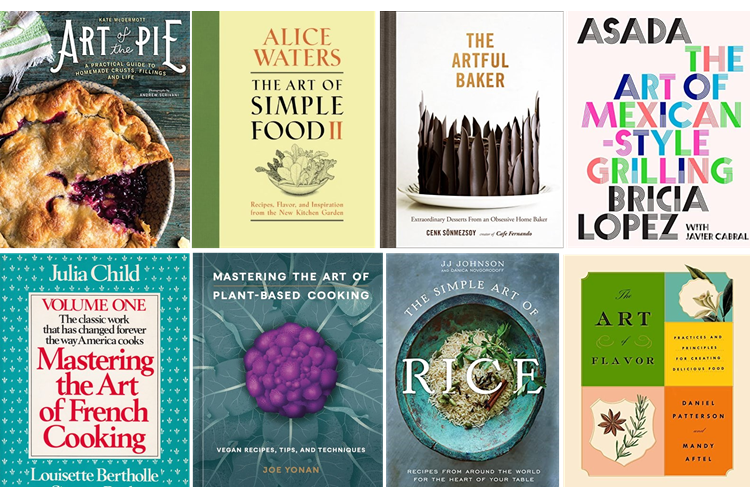
While I believe that cooking and baking can be creative outlets, I am not sure I would classify those as being on the same level as painting, sculpture, or music. For one thing, while the visual display of food can be admired through a photograph, only a few people will be able to experience the scents and flavors. If food cannot be shared widely the same way a painting can be viewed or music can be heard, does that automatically disqualify it from being art? That said, some of my cookbooks contain photos and recipes for dishes that are meant to convey emotion or meaning that transcends the ingredients themselves. That seems like it would qualify as art, and the way people would experience it is to make the dish themselves. Where do you land on this debate?
Categories
- All Posts (7397)
- Antipasto (2369)
- Author Articles (260)
- Book News (959)
- Cookbook Giveaways (1009)
- Cookbook Lovers (272)
- Cooking Tips (133)
- Culinary News (308)
- Food Biz People (577)
- Food Online (831)
- Holidays & Celebrations (293)
- New Cookbooks (165)
- Recipes (1548)
- Shelf Life With Susie (231)
- What's New on EYB (142)
Archives
Latest Comments
- anya_sf on Avoid these mistakes when buying produce
- MollyB on Why the refrigerator is bad for bread
- London_Mummy on Avoid these mistakes when buying produce
- FuzzyChef on Avoid these mistakes when buying produce
- FromScratch on Tomato growing tips from an expert
- Duncanarmour on Gloagburn: Recipes from a Scottish Farm – Giveaway
- janecooksamiracle on Why the refrigerator is bad for bread
- KatieK1 on Why the refrigerator is bad for bread
- bc2rlh2023 on Chesnok by Polina Chesnakova – Cookbook Giveaway
- FJT on Bringing back flavorful food